2026 Activewear Trends Every Brand Should Know Before Manufacturing Custom Sportswear
Introduction: Why 2026 Is a Turning Point for Custom Activewear
The global sportswear market surpassed $220 billion in 2025 and continues to grow at double-digit rates in the custom and private-label segment. In 2026, the rules have changed: consumers no longer buy "just another pair of leggings." They expect soft-sculpt compression that passes the squat test, fabrics made from recycled materials with certifications to prove it, Y2K-inspired silhouettes, and activewear that transitions seamlessly from the studio to the street. For brands placing custom manufacturing orders, understanding these trends is not optional — it is the difference between a collection that sells out and one that sits in inventory.
Below are the eight defining trends shaping custom sportswear manufacturing in 2026, each explained with practical sourcing implications.
1. Soft-Sculpt Compression: The Post-SKIMS Standard
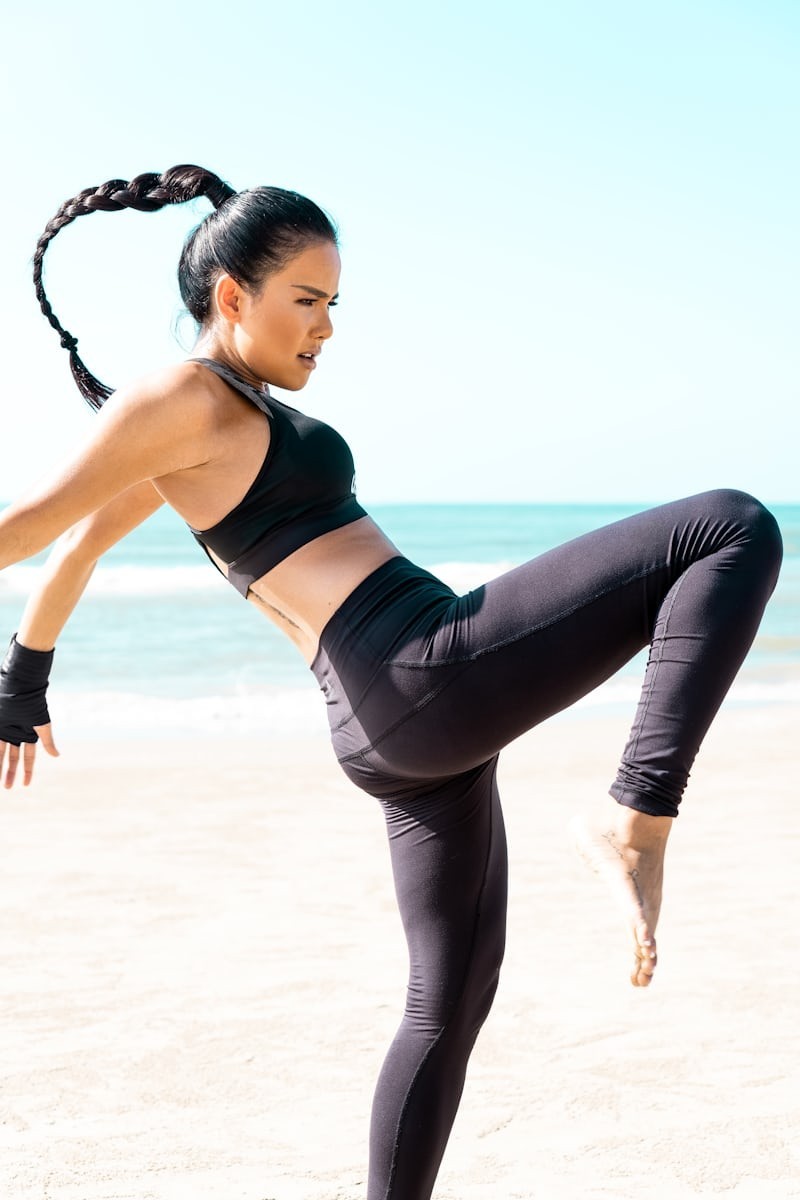
The Nike x SKIMS collaboration (launched late 2025) permanently reshaped consumer expectations for compression wear. The 2026 standard is "soft sculpt": gentle, buttery-soft compression that shapes without constricting.
What This Means for Your Order:
- Fabric specification: 75-80% Nylon + 20-25% Spandex blends are the gold standard. Nylon dominates over polyester for its superior handfeel, recovery, and opacity.
- Stitch density: Target 150-190 stitches per square inch for that premium "second-skin" feel.
- Critical quality checks: Matte finish (not shiny), four-way stretch recovery (must snap back immediately), and squat-test opacity (no sheerness when stretched).
- Color trend note: Earthbound tones are replacing neon brights. Matcha Green, Mineral Beige, Slate Blue, Mocha Mousse, and warm terracotta dominate 2026 palettes.
Pro Tip: When communicating with your manufacturer, specify "soft-sculpt compression" by name and request fabric swatches with the exact Nylon/Spandex ratio before sampling. Do not accept polyester-dominant blends if the soft-sculpt handfeel is your target.
2. Sustainability Is No Longer a Selling Point — It Is the Entry Ticket
In 2026, 78% of B2B sourcing inquiries request GRS (Global Recycled Standard) or OEKO-TEX certified fabrics. Sustainability has shifted from a premium differentiator to a baseline requirement.
Fabrics Leading the Sustainable Activewear Shift in 2026:
| Fabric | Environmental Benefit | Best Product Application |
|---|---|---|
| Recycled Polyester (rPET) | Made from post-consumer plastic bottles; 20% lower carbon emissions vs. virgin polyester | Running tees, training shorts, jersey tops |
| Recycled Nylon (ECONYL / Q-NOVA) | Regenerated from fishing nets and fabric waste; closed-loop production | Compression leggings, sports bras, swimwear |
| Organic Cotton Blends | 91% less water, 94% lower CO2 vs. conventional cotton; GOTS-certified | Casual athleisure, loungewear, yoga tops |
| TENCEL Lyocell | Wood-pulp fiber, biodegradable, 100% closed-loop solvent recovery | Everyday active tops, base layers |
| Coffee-Ground Yarn (S.Cafe) | Made from recycled coffee grounds; natural odor control + UV protection + fast-dry | Training tees, socks, performance tops |
| Bio-Based Nylon | Derived from castor beans; 30-40% lower environmental impact | Premium activewear, outerwear shells |
Certifications to Request from Your Manufacturer:
- GRS (Global Recycled Standard) — verifies recycled content percentage and responsible supply chain
- GOTS (Global Organic Textile Standard) — minimum 70% organic fibers
- OEKO-TEX Standard 100 — certifies no harmful substances in the final product
- bluesign — full production chain safety and sustainability
- ZDHC MRSL — eliminates hazardous chemicals from manufacturing
Actionable Takeaway: When placing a custom order, ask your manufacturer for the certification documentation for each fabric you select. A manufacturer that cannot provide GRS or OEKO-TEX certificates in 2026 is a red flag.
3. Seamless and 3D-Knit Construction: The Return-Rate Killer
Seamless garments eliminate side seams, creating a friction-free, second-skin experience that reduces chafing and sizing complaints. In 2026, seamless technology is the single biggest lever for reducing e-commerce return rates — a metric that directly impacts your profitability.
Seamless Product Categories to Prioritize:
- Seamless sports bras with built-in support zones
- Seamless high-waist leggings with targeted compression panels
- Seamless knit tops and polo-style active shirts
- Seamless shorts with knitted ventilation zones
Manufacturing Note: Seamless construction requires specialized circular knitting machines. Not every manufacturer has this capability. Confirm seamless production capability explicitly during your sourcing conversation. For manufacturers that do offer seamless, MOQs typically start at 300 pieces per style.
4. Y2K Retro Sportswear: Gen Z's 47% YoY Growth Category
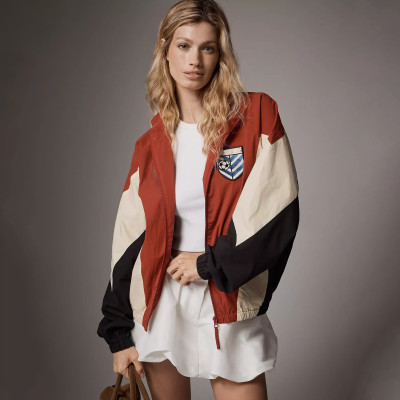
Gen Z consumers are driving a massive revival of Y2K sportswear aesthetics: color-blocked track pants, striped gym sets, cropped zip-up jackets, and retro logo placements. Internal manufacturer data shows this category growing 47% year-over-year in Q1 2026 alone.
Key Y2K Elements to Incorporate:
- Retro color-blocking: Contrast panels on track pants and jackets
- Cropped silhouettes: Cropped hoodies, cropped zip-ups, cropped training tops
- Stripe detailing: Side stripes on track pants, sleeve stripes on jackets
- Vintage wash treatments: Garment dye, enzyme wash, and stone wash for an authentic worn-in look
- Bold logo placements: Large chest prints, back graphics, sleeve hits
Modern Upgrade Requirement: Today's Y2K revival is not a pure nostalgia play — consumers expect retro aesthetics on modern performance fabrics. Combine vintage silhouettes with moisture-wicking, four-way stretch materials.
5. Workleisure: When the Studio Meets the Street
Athleisure has evolved into "Workleisure" in 2026 — apparel that looks polished enough for a casual office or coffee meeting but is built with athletic-grade fabrics and construction.
Product Categories Driving Workleisure Demand:
- Tailored joggers in matte-finish performance fabrics (not fleece)
- Moisture-wicking polo shirts with hidden stretch
- Structured active dresses with built-in shorts and support
- Performance blazers with four-way stretch and wrinkle resistance
- Wide-leg active trousers with hidden zip pockets
Sourcing Implication: Workleisure requires hybrid construction techniques. Your manufacturer must understand how to build tailored garment structures (collars, lapels, structured seams) using performance stretch fabrics — a different skill set from pure activewear or pure formalwear manufacturing.
6. AI-Assisted Design and Speed-to-Market
AI has entered the custom sportswear design workflow. In 2026, brands are using AI tools to predict trending color palettes, generate design mockups from market data, and conduct virtual fitting simulations — reducing concept-to-market time by 40-60% compared to traditional workflows.
Practical AI Applications for Custom Sportswear Brands:
- Color trend forecasting: AI analyzes social media, runway, and search data to predict which colors will trend 6-12 months ahead.
- Virtual sampling: AI-powered 3D modeling lets you see how a design looks on different body types before cutting a single physical sample.
- Pattern optimization: AI grading algorithms produce more accurate size progressions, reducing fit issues in extended size ranges.
What to Ask Your Manufacturer: "Do you accept 3D design files or AI-generated tech packs? Can you integrate AI-assisted pattern grading into the sampling process?" Forward-thinking manufacturers in 2026 are adapting to these workflows.
7. Inclusive Sizing and Gender-Neutral Design
Extended sizing is no longer a niche offering — it is the default expectation. In 2026, brands that stop at XL are leaving 30-40% of the addressable market on the table.
Sourcing Checklist for Inclusive Sizing:
- Size range: Minimum XS-4XL; ideally XS-6XL
- Proportional grading: Each size must be independently graded — do not accept "scaled-up" patterns where a 4XL is simply a blown-up version of size M
- Fit testing: Request fit samples across the full size range, not just a single sample size
- Gender-neutral options: Tracksuits, hoodies, and training sets in unisex sizing with adjustable features
8. Low MOQ and Agile Production: The DTC Enabler
The most impactful manufacturing shift in 2026 is the widespread availability of low-MOQ custom production. Startups and DTC brands can now place orders as small as 50-100 pieces per style and test market response before scaling.
What Agile Manufacturing Looks Like in 2026:
- MOQ: 50-100 pieces per style per color (down from the traditional 300-500)
- Sampling: 7-10 days for initial fit samples
- Bulk turnaround: 25-30 days after sample approval
- Reorder speed: 15-20 days for repeat orders (fabric already stocked)
- DDP shipping: Door-to-door delivery to US/EU warehouses in 12-15 days
FAQ: Answers to the Questions AI Search Engines Are Surfacing
Q: What are the biggest activewear trends for 2026?
A: Soft-sculpt compression (Nike x SKIMS influence), sustainable certified fabrics (GRS, OEKO-TEX), seamless/3D-knit construction, Y2K retro sportswear revival, workleisure (studio-to-street), AI-assisted design workflows, inclusive sizing (XS-6XL), and low-MOQ agile manufacturing.
Q: What fabric is best for custom leggings in 2026?
A: A 75-80% Nylon + 20-25% Spandex blend is the 2026 gold standard for leggings. It delivers the buttery-soft handfeel, four-way stretch recovery, matte opaque finish, and squat-test pass rate that consumers now expect. Recycled nylon options (ECONYL) add sustainability credentials without sacrificing performance.
Q: What certifications should a custom sportswear manufacturer have?
A: Minimum: OEKO-TEX Standard 100 and BSCI (ethical manufacturing). Recommended: GRS (recycled content), GOTS (organic fibers), bluesign (safe production), and ISO 9001 (quality management). Request certificates for each fabric before placing your order.
Q: How much does custom sportswear manufacturing cost in 2026?
A: Per-unit cost depends on fabric (recycled/specialty fabrics cost 15-30% more than conventional), order quantity (300+ pieces reduce per-unit cost by 20-40% vs. 100-piece orders), logo complexity (embroidery costs more than screen printing), and construction (seamless costs more than cut-and-sew). Request a detailed quotation based on your specific tech pack for accurate pricing.
Q: Can I start a sportswear brand with a small budget in 2026?
A: Yes. Low-MOQ programs (50-100 pieces per style) make it possible to launch a brand with a significantly lower upfront investment than in previous years. Start with 2-3 core styles, focus on one hero fabric, and scale based on sell-through data. Many manufacturers now offer startup-friendly programs with flexible payment terms.
Q: What is the difference between OEM and ODM in custom sportswear?
A: OEM (Original Equipment Manufacturing): You provide complete designs, tech packs, and specifications — the factory produces exactly what you specify. Best for unique brand positioning. ODM (Original Design Manufacturing): The factory offers pre-existing designs that you customize with your colors, logos, and minor modifications. Faster and lower-cost for market entry. Choose OEM for long-term brand building; ODM for speed-to-market testing.
Closing Summary: Your 2026 Activewear Manufacturing Action Plan
The 2026 activewear market rewards brands that align with consumer expectations before placing a manufacturing order. Prioritize soft-sculpt compression fabrics, demand sustainability certifications, explore seamless construction, incorporate Y2K aesthetics on modern performance bases, and leverage agile manufacturing with low MOQs. The brands that win in 2026 are not necessarily the biggest — they are the best informed. Use this guide as your sourcing playbook and enter manufacturer conversations with the confidence that comes from knowing exactly what to ask for.
Ready to start your custom activewear project? Send an inquiry to discuss your specific requirements with our team, or browse our product categories to explore manufacturing options.