OEM vs ODM in Sportswear Manufacturing: Which is Right for Your Brand?
Launching an activewear brand is one of the most profitable ventures in today’s fashion industry. The demand for “street-to-studio” athleisure is at an all-time high.
However, when you start reaching out to custom activewear manufacturers like Wensfashion, you will immediately encounter two acronyms: OEM and ODM.
Choosing the wrong manufacturing model can drain your budget and delay your launch. As a premium activewear manufacturer with over a decade of experience, we created this guide to help you understand the exact differences and decide which path is right for your brand.
What is OEM? (Original Equipment Manufacturing)
In the OEM model, you are the creator, and the factory is your builder.
You provide the factory with a detailed Tech Pack, which includes your unique clothing sketches, exact measurements, fabric composition (e.g., 75% Nylon, 25% Spandex), and stitch requirements. The factory’s job is to manufacture the garment exactly according to your specifications.
The Pros of OEM:
100% Unique Design: Your activewear will stand out in the market. No one else will have your exact silhouette or custom cut-outs.
Full Creative Control: You dictate every detail, from the zipper quality to the eco-friendly fabric choices.
Intellectual Property: You own the rights to the designs.
The Cons of OEM:
Higher R&D Costs & Time: Developing a garment from scratch requires multiple rounds of sampling, taking weeks or even months.
Expertise Required: You need a professional fashion designer or pattern maker on your team to create accurate Tech Packs.
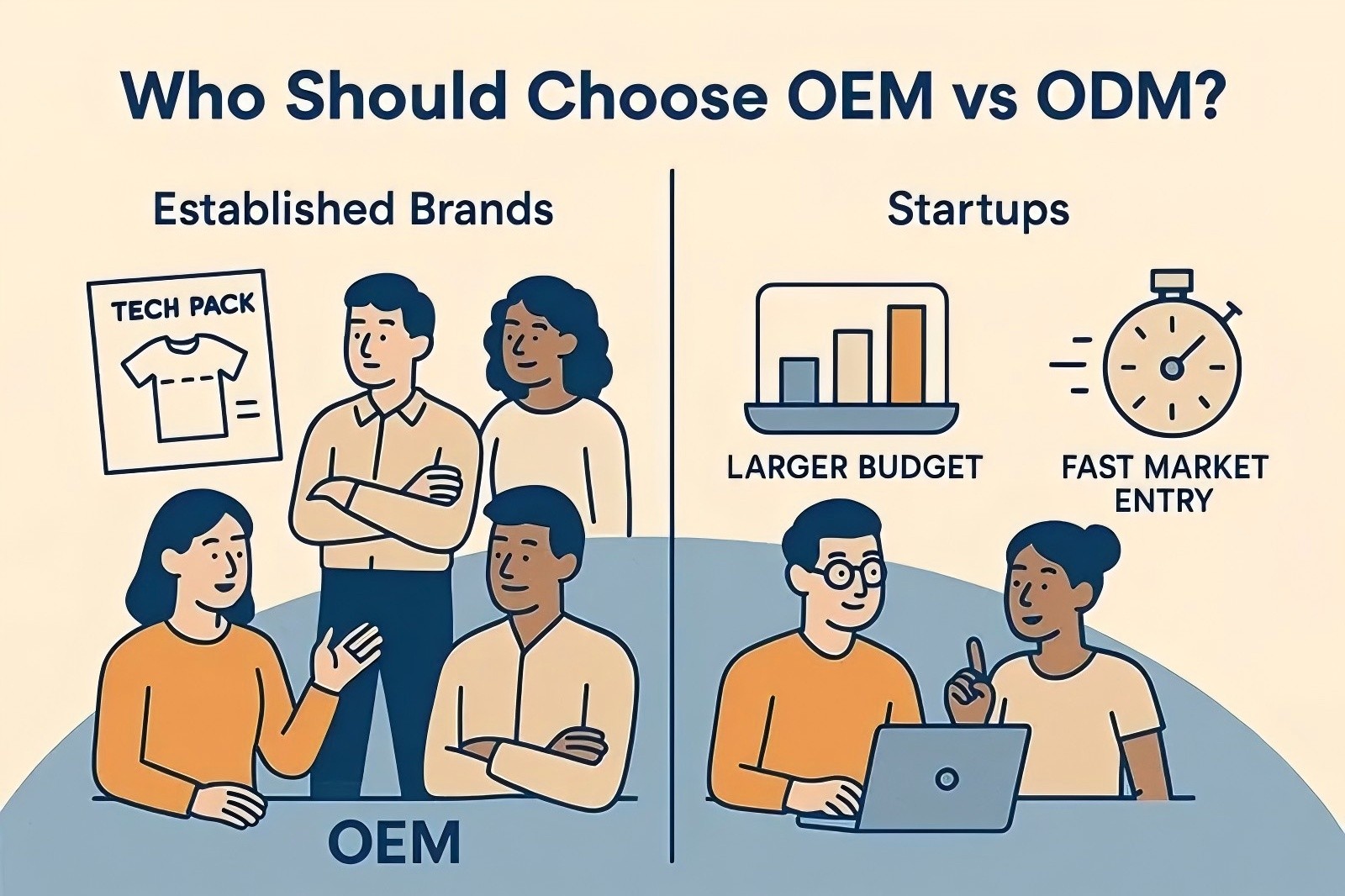
👉 Best for: Established fashion brands, professional designers, or brands that want to introduce highly unique, complex athleisure pieces to the market.
What is ODM? (Original Design Manufacturing)
In the ODM model (often called Private Labeling or White Labeling), the factory is the creator, and you are the brander.
The manufacturer has a dedicated R&D team that analyzes global trends (like Y2K styles, seamless ribbed fabrics, and quiet luxury colors) and develops a catalog of ready-to-produce activewear. You select the styles you like, ask the factory to dye them in your brand colors, and add your custom logo and tags.
The Pros of ODM:
Speed to Market: Since the pattern and design are already tested, you skip the lengthy R&D phase and go straight to sampling and production.
Cost-Effective: You save thousands of dollars on hiring designers and pattern makers.
Leverage Factory Expertise: Premium factories like Wensfashion know exactly what is trending in the athleisure market right now. You benefit directly from our fashion insights.
The Cons of ODM:
Less Exclusivity: Other brands might use the same foundational design (though different colors and logos will make it look distinct).
👉 Best for: Fitness influencers (KOLs), gym owners, and start-up entrepreneurs who want to launch a high-quality activewear line quickly without deep technical design knowledge.
OEM vs. ODM: A Quick Comparison
| Feature | OEM (Original Equipment) | ODM (Original Design / Private Label) |
| Who Designs It? | You (The Brand) | The Factory (e.g., Wensfashion) |
| Time to Market | Slower (Requires extensive R&D) | Faster (Ready-to-produce patterns) |
| R&D Cost | High (Designers, multiple samples) | Low to None |
Exclusivity | 100% Unique | Customizable, but base pattern is shared |
Required Expertise | High (Must provide Tech Packs) | Low (Just choose styles & colors) |
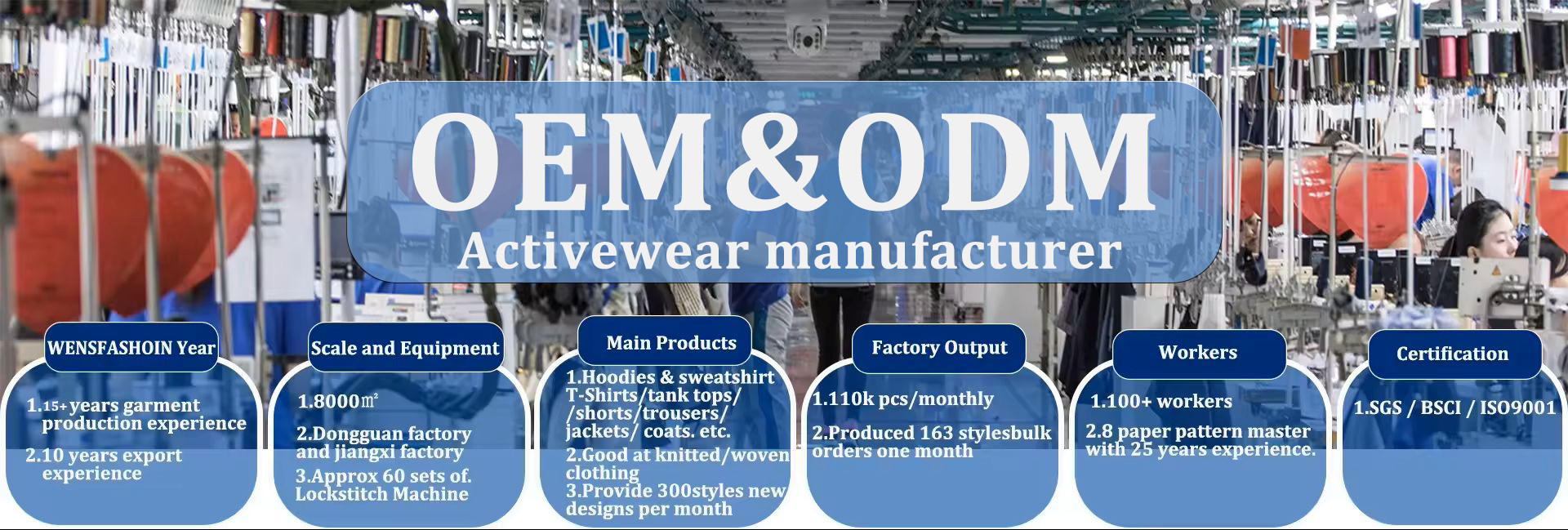
The Wensfashion Advantage: We Do Both
Many standard factories only do OEM because they lack a design team, or they only do cheap ODM with outdated styles.
At Wensfashion, we bridge the gap between high fashion and sportswear.
If you choose OEM: Our expert pattern makers will execute your complex “street-to-studio” designs with precision, sourcing the finest buttery-soft and sustainable fabrics.
If you choose ODM: You gain access to our extensive catalog of trend-forward athleisure. We don’t just offer basic leggings; we offer flared yoga pants, asymmetrical sports bras, and seamless ribbed sets that are guaranteed best-sellers.
How to Make Your Decision
Still unsure? Ask yourself this simple question:
Do I have a unique clothing design that the world hasn’t seen yet, and the technical skills to explain it? Choose OEM.
Do I want to sell premium, trendy activewear with my logo on it as quickly and safely as possible? Choose ODM.
Whether you are launching your first collection or scaling a global brand, having the right manufacturing partner is everything.
👉 [Contact Wensfashion Today] Tell us about your brand vision, and our experts will help you choose the best manufacturing path and provide a free quote!
Frequently Asked Questions (FAQ)
Q: Can I mix OEM and ODM in my collection?
A: Yes! Many successful brands use a hybrid approach. They might use ODM for basic items (like standard biker shorts) to save money, and use OEM for their signature “hero” products (like a custom-designed jacket). Wensfashion supports this hybrid model perfectly.
Q: Are MOQs different for OEM and ODM?
A: Sometimes. Because ODM patterns are already developed, factories can occasionally offer slightly more flexible timelines or MOQs compared to a highly complex, ground-up OEM project. However, at Wensfashion, we strive to keep MOQs reasonable (around 100-300 pcs) for both models to support brand growth.
Q: Does Wensfashion protect my OEM designs?
A: Absolutely. We respect your intellectual property. We are happy to sign an NDA (Non-Disclosure Agreement) before you send us your Tech Packs. Your designs remain 100% yours.